


Nights Away
Nights away or residential events help young people to become resilient. Whether it’s camping, hostelling, sleepovers or bivouacking, a Nights Away experience forms an integral part of scouting, and are something that every young person should have the opportunity to take part in.
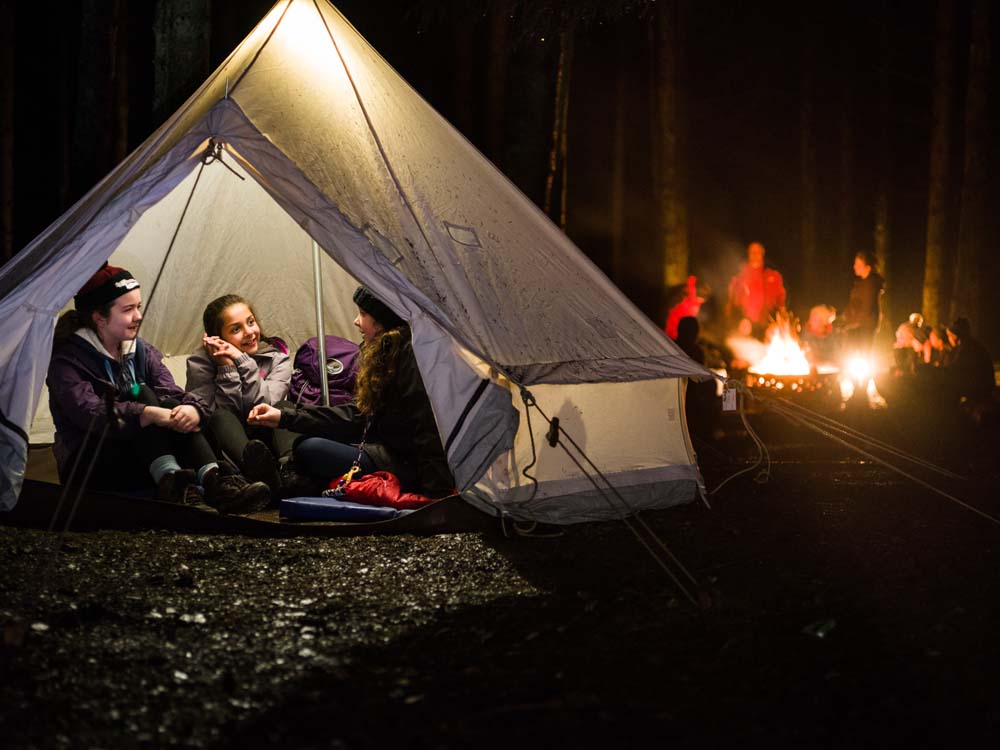
Planning a nights away experience? Don’t forget to submit a notification for approval ideally fourteen days before the event takes place.
Frequently asked questions
Who’s approval do I need?
All Nights Away Notifications for Nights Away activities (including events involving adults only) will be approved directly by the District Lead Volunteer, Programme Team Leader or nominee and must be submitted via the scouts membership system to ensure all the information provided on the form complies to the requirements for a Nights Away experience and so that there is sufficient record of the event in case of an emergency.
Who can run Nights Away experiences?
To run a Nights Away experience a nights away permit is required. There are different levels of permit that allow you to take young people on different types of residential experiences.
What’s the difference between Indoor, Campsite and Greenfield?
There are four categories of permit POR 9.57:
- Indoor – for staying in a building that has built in lighting and cooking facilities, toilets plumbed into a waste disposal system (i.e. a cess pit, storage tank or mains drains) and running drinking water.
- Campsite – for staying at a site that has toilets plumbed into a waste disposal system (eg. a cess pit, storage tank or mains drains) and access to running drinking water. Those holding a Camp Site Permit may also run indoor residential events.
- Green Field – for staying at any site where any of the above facilities do not exist – for example, a summer camp on a farmer’s field. Those holding a Green Field Permit may lead residential events in the other three categories.
- Lightweight Expedition – for staying at any site for not more than one night before moving on. The core activity is a form of expedition, not residential, and all the equipment is transported with the participants. eg. QSA/DofE hikes, expedition hikes, canoe expeditions.
What’s a Nights Away Passport?
Nights Away Event Passports exist to enable young people in the Scout and Explorer Scout sections, who are deemed suitably skilled, to undertake a nights away activity as a peer group. Examples of this include patrol camps and expeditions.
Nights Away Event Passports can only be issued by those with a Nights Away Permit and can only be issued to the same level as the permit held, for example someone with a campsite nights away permit can not issue a passport for activities in greenfield areas.
Nights Away Event Passports are only available within the Scout and Explorer Scout Sections, and are only for use with peer led activities. This means that they can not be used for Explorer Scout Young Leaders leading activities for the sections they volunteer with, or for activities where adults will be present with the group. The young person or young people issued with the passport must display appropriate skills to the permit holder in order to demonstrate their ability to safely undertake the proposed activity.
Event passports are only for Scout and Explorer Scout members to participate in peer led activities they cannot be issued to adults.
What is InTouch?
InTouch is the system that helps you to communicate at all Scout activities and events. It’s flexible and lets Units, Groups and Sections work out the best way to keep in touch during these activities.
At any Scouting activity, you will need to make sure that you have an InTouch system in place (POR 9.3). This is to make sure that:
- everyone involved knows how Leaders, participants and people not at the event will communicate
- you have all of the details of who is at the event just in case something goes wrong, and you have a system in place in case of an emergency.
This system is likely to be different depending on what activity or event you are running, and the needs of who will be there. An InTouch system is important so that everyone knows of the process for every Scouting event.
What information do I need for approval?
Before you complete a nights away notification, you will need to ensure you have all the information about the activity at hand.
How can I gain a permit?
The nights away permit scheme is an internal assessment scheme designed to ensure that all those leading nights away events for young people within Scouting have the skills, experience and personal suitability to do so.
To gain a permit you will need to complete an assessment with a nights away advisor.
The permit scheme
You can find full details of the nights away permit scheme in the factsheets below. These include factsheets for specific roles such as commissioner and applicant.
- Nights Away Permit Scheme (FS120800)
- Nights Away Permit Scheme – Applicants’ guide (FS120801)
- Nights Away Permit Scheme – Assessment guide (FS120802)
- Nights Away Permit Scheme – Commissioners’ guide (FS120803)
- Nights Away Permit Scheme – Nights Away Advisers’ guide (FS120804)
There is also an assessment checklist that the nights away adviser uses to assess any applicants for nights away permits.
There are some FAQ’s available to support nights away.
Emergencies and reporting
What to do in an Emergency
It is important to know what to do in an emergency and for all involved in an activity to be on the same page with what is going to happen. It is also important to have clear processes for reporting of incidents, both locally, nationally and where appropriate to other agencies.
- Deal with the immediate situation and alert the appropriate emergency services, if required.
- Alert the District Lead Volunteer :+44 7540 721822. (If they are unavailable please leave a voicemail with your name, number and the nature of the incident and someone will get back to you ASAP).
- Alert the emergency contact of those individuals involved.
- If you are abroad, alert any agencies required by the insurers.
- For incidents involving air activities or water activities in coastal or deepsea waters notify the appropriate government agency.
- Inform UK Headquarters at the earliest opportunity if:
- someone suffers a personal injury or illness requiring a doctor, nurse,paramedic, dentist or hospital.
- someone requires an emergency service rescue.
- third party property is damaged.
In the event of a critical incident (one involving loss of life, near loss of life or collapse of a structure):
- Deal with the immediate situation and alert the appropriate emergency services, if required.
- Alert UK Headquarters (you will need to provide a basic overview of the incident, who is involved, where the incident occurred and Group information). A Critical Incident Manager will assist you and guide you through the management of the incident.
The contact telephone number for the Duty Media Officer at Headquarters is: 0345 300 1818
After office hours a recorded message detailing the contact telephone number of the Duty Media Officer is available.
The purple card contains essential Information to help you plan safe activities and the necessary prompts to aid you in the event of an accident. You can also get a handy pocket sized card from either the District Shop or main Scout Store.
Reporting an incident
Should the worst happen and an accident or incident occur, this needs to be reported especially where a young person or adult seeks medical assistance (even after the fact) or the emergency services are involved even if they weren’t ultimately required. You have the option of reporting an incident by calling the Info Centre or by completing the online incident reporting form yourself. When reporting an incident you will need to provide the following information:
- Name of injured person, membership type, Group/Unit, District and County
- Date of incident
- Activity being undertaken
- Nature of the injury and severity (were they kept in hospital overnight)
- Any external agencies involved
- Who is reporting the incident and how can they be contacted
Please ensure your Group Lead Volunteer/14 – 24 Team Leader/Manager has been informed and incident logged with the District Team in addition to reporting to HQ.
Near Miss Reporting
As well as reporting incidents where injuries occur it is also important to log and track incidents which could have resulted in significant injury or impact or could have been much worse given a few minor changes to the situation.
The Scout Association have an online near miss form which allows members to share information about these incidents which can then be learned from to prevent future incidents.
An accident or near miss that takes place at a Doncaster Danum facility
At Doncaster Danum Scouts, the health and safety of all our customers and volunteers is vitally important. If you experience or witness a Near Miss or Safety incident while using one of our facilities please let us know so we can ensure it can’t happen again.
Local Recording
It is important to make local records of any incidents, this will allow you to pass relevant information to parents following an incident. Recording of incidents needs to be done in a sensitive way and meeting all data protection regulations. The learns from the incident should be shared and discussed at the relevant Trustee Board and leaders meeting to help prevent it from happening again.
Does my permit need renewing?
Yes. All Activity and Nights Away permits periodically need renewing. The maximum a permit can be granted for by the District Lead Volunteer is 5 years. Please ensure you check compass regularly and put a reminder in your diary.
Nights Away
To renew a nights away permit you will need to complete a renewal and upload a log book in the Scouts Membership System
Activity Permits
To renew an activity permit you will need to complete a renewal and upload a log book in the Scouts Membership System
Do I need a risk assessment?
Yes all Scout Activities including nights away and adventurous activities require a written risk assessment POR 9.4
For more support on writing a risk assessment check out the Scouts website
Adult to young people ratios
Ratios for online Scouting
There must be at least two adults present at all times during any online activity. Ideally both adults should be Scout volunteers, but you can use a parent rota to support as you would normally do. Young people must never be left in a one-to-one situation with an adult. This protects us all and underlines our commitment to effective safeguarding. Learn more about staying safe online
Squirrels
Indoors: One adult to six Squirrels, plus the Leader in charge. A minimum of three adults regardless of the number of Squirrels attending.
Outdoor Activities held away from the usual meeting place: One adult to four Squirrels, plus the Leader in charge. A minimum of three adults regardless of the number of Squirrels attending.
Nights away experiences (led by Nights Away Permit Holder): One adult to four Squirrels, plus the Leader in charge. Minimum of three adults must be present.
Beavers
Indoors: Minimum of two adults present
Outdoor Activities held away from the usual meeting place: One adult to six Beavers, plus the Leader in charge
Nights away experiences (led by Nights Away Permit Holder): One adult to six Beavers, plus the Leader in charge. Minimum of two adults must be present overnight.
Cubs
Indoors: Minimum of two adults present
Outdoor activities held away from the usual meeting place: One adult to eight Cubs, plus the Leader in charge
Nights away experiences (led by Nights Away Permit Holder): One adult to eight Cubs, plus the Leader in charge. Minimum of two adults must be present overnight.
Scouts
Indoors: Minimum of two adults present
Outdoor activities held away from the usual meeting place: The recommended minimum ratio for outdoor activities held away from the usual meeting place is one adult or helper to 12 Scouts. As a minimum, there must be two adults or helpers present at least one of whom must have a full adult appointment with the Troop.
Nights away experiences (led by Nights Away Permit Holder): One adult to twelve Scouts. Minimum of two adults must be present overnight
It’s possible for young people to hold a Nights Away Event Passport, which allows them to run a nights away event for their peers, without adults present. In which case, the ratios will not apply.
Explorers
For all Explorer Scout regular indoor meetings a minimum of two adults must be present and a minimum of two adults for all nights away activities.
For all meetings and activities, leaders should assess the risk and make sure that there are enough adults present to keep everything safe while the section is running. This risk assessment may mean that more adults are needed than the minimum ratios.
It’s possible for young people to hold a Nights Away Event Passport, which allows them to run a nights away event for their peers, without adults present. In which case, the ratios will not apply.
Adventurous Activities
We’re known for our love of adventure, which is why the ideal Scout programme includes a healthy dose of thrill seeking, whether you’re outside or in.
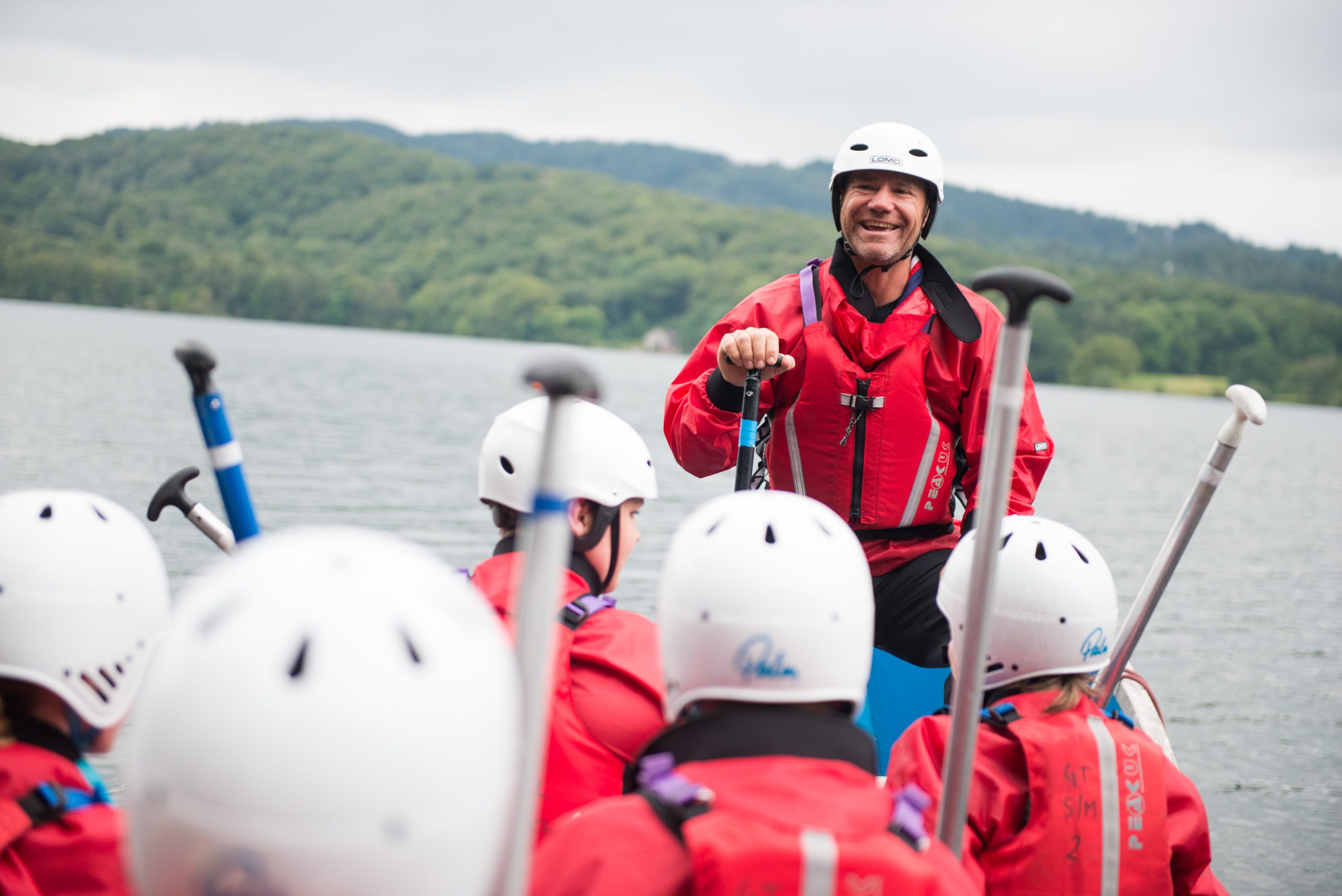
Running an adventurous activity? Don’t forget to submit a notification for approval ideally fourteen days before the event takes place.
Frequently asked questions
What is InTouch?
InTouch is the system that helps you to communicate at all Scout activities and events. It’s flexible and lets Units, Groups and Sections work out the best way to keep in touch during these activities.
At any Scouting activity, you will need to make sure that you have an InTouch system in place (POR 9.3). This is to make sure that:
- everyone involved knows how Leaders, participants and people not at the event will communicate
- you have all of the details of who is at the event just in case something goes wrong, and you have a system in place in case of an emergency.
This system is likely to be different depending on what activity or event you are running, and the needs of who will be there. An InTouch system is important so that everyone knows of the process for every Scouting event.
What information do I need for approval?
Before you complete a nights away notification, you will need to ensure you have all the information about the activity at hand.
Emergencies and reporting
What to do in an Emergency
It is important to know what to do in an emergency and for all involved in an activity to be on the same page with what is going to happen. It is also important to have clear processes for reporting of incidents, both locally, nationally and where appropriate to other agencies.
- Deal with the immediate situation and alert the appropriate emergency services, if required.
- Alert the District Lead Volunteer :+44 7540 721822. (If they are unavailable please leave a voicemail with your name, number and the nature of the incident and someone will get back to you ASAP).
- Alert the emergency contact of those individuals involved.
- If you are abroad, alert any agencies required by the insurers.
- For incidents involving air activities or water activities in coastal or deepsea waters notify the appropriate government agency.
- Inform UK Headquarters at the earliest opportunity if:
- someone suffers a personal injury or illness requiring a doctor, nurse,paramedic, dentist or hospital.
- someone requires an emergency service rescue.
- third party property is damaged.
In the event of a critical incident (one involving loss of life, near loss of life or collapse of a structure):
- Deal with the immediate situation and alert the appropriate emergency services, if required.
- Alert UK Headquarters (you will need to provide a basic overview of the incident, who is involved, where the incident occurred and Group information). A Critical Incident Manager will assist you and guide you through the management of the incident.
The contact telephone number for the Duty Media Officer at Headquarters is: 0345 300 1818
After office hours a recorded message detailing the contact telephone number of the Duty Media Officer is available.
The purple card contains essential Information to help you plan safe activities and the necessary prompts to aid you in the event of an accident. You can also get a handy pocket sized card from either the District Shop or main Scout Store.
Reporting an incident
Should the worst happen and an accident or incident occur, this needs to be reported especially where a young person or adult seeks medical assistance (even after the fact) or the emergency services are involved even if they weren’t ultimately required. You have the option of reporting an incident by calling the Info Centre or by completing the online incident reporting form yourself. When reporting an incident you will need to provide the following information:
- Name of injured person, membership type, Group/Unit, District and County
- Date of incident
- Activity being undertaken
- Nature of the injury and severity (were they kept in hospital overnight)
- Any external agencies involved
- Who is reporting the incident and how can they be contacted
Please ensure your Group Lead Volunteer/14 – 24 Team Leader/Manager has been informed and incident logged with the District Team in addition to reporting to HQ.
Near Miss Reporting
As well as reporting incidents where injuries occur it is also important to log and track incidents which could have resulted in significant injury or impact or could have been much worse given a few minor changes to the situation.
The Scout Association have an online near miss form which allows members to share information about these incidents which can then be learned from to prevent future incidents.
An accident or near miss that takes place at a Doncaster Danum facility
At Doncaster Danum Scouts, the health and safety of all our customers and volunteers is vitally important. If you experience or witness a Near Miss or Safety incident while using one of our facilities please let us know so we can ensure it can’t happen again.
Local Recording
It is important to make local records of any incidents, this will allow you to pass relevant information to parents following an incident. Recording of incidents needs to be done in a sensitive way and meeting all data protection regulations. The learns from the incident should be shared and discussed at the relevant Trustee Board and leaders meeting to help prevent it from happening again.
Does my permit need renewing?
Yes. All Activity and Nights Away permits periodically need renewing. The maximum a permit can be granted for by the District Lead Volunteer is 5 years. Please ensure you check compass regularly and put a reminder in your diary.
Nights Away
To renew a nights away permit you will need to complete a renewal and upload a log book in the Scouts Membership System
Activity Permits
To renew an activity permit you will need to complete a renewal and upload a log book in the Scouts Membership System
Do I need a risk assessment?
Yes all Scout Activities including nights away and adventurous activities require a written risk assessment POR 9.4
For more support on writing a risk assessment check out the Scouts website
Adult to young people ratios
Ratios for online Scouting
There must be at least two adults present at all times during any online activity. Ideally both adults should be Scout volunteers, but you can use a parent rota to support as you would normally do. Young people must never be left in a one-to-one situation with an adult. This protects us all and underlines our commitment to effective safeguarding. Learn more about staying safe online
Squirrels
Indoors: One adult to six Squirrels, plus the Leader in charge. A minimum of three adults regardless of the number of Squirrels attending.
Outdoor Activities held away from the usual meeting place: One adult to four Squirrels, plus the Leader in charge. A minimum of three adults regardless of the number of Squirrels attending.
Nights away experiences (led by Nights Away Permit Holder): One adult to four Squirrels, plus the Leader in charge. Minimum of three adults must be present.
Beavers
Indoors: Minimum of two adults present
Outdoor Activities held away from the usual meeting place: One adult to six Beavers, plus the Leader in charge
Nights away experiences (led by Nights Away Permit Holder): One adult to six Beavers, plus the Leader in charge. Minimum of two adults must be present overnight.
Cubs
Indoors: Minimum of two adults present
Outdoor activities held away from the usual meeting place: One adult to eight Cubs, plus the Leader in charge
Nights away experiences (led by Nights Away Permit Holder): One adult to eight Cubs, plus the Leader in charge. Minimum of two adults must be present overnight.
Scouts
Indoors: Minimum of two adults present
Outdoor activities held away from the usual meeting place: The recommended minimum ratio for outdoor activities held away from the usual meeting place is one adult or helper to 12 Scouts. As a minimum, there must be two adults or helpers present at least one of whom must have a full adult appointment with the Troop.
Nights away experiences (led by Nights Away Permit Holder): One adult to twelve Scouts. Minimum of two adults must be present overnight
It’s possible for young people to hold a Nights Away Event Passport, which allows them to run a nights away event for their peers, without adults present. In which case, the ratios will not apply.
Explorers
For all Explorer Scout regular indoor meetings a minimum of two adults must be present and a minimum of two adults for all nights away activities.
For all meetings and activities, leaders should assess the risk and make sure that there are enough adults present to keep everything safe while the section is running. This risk assessment may mean that more adults are needed than the minimum ratios.
It’s possible for young people to hold a Nights Away Event Passport, which allows them to run a nights away event for their peers, without adults present. In which case, the ratios will not apply.
Who do I need to notify / When do I need approval?
Last updated: 26 January 2024
- Group Lead Volunteers are responsible for authorising all activities that take place in Squirrel, Beaver, Cub and Scout sections or for adults in their Group (with the exception of those mentioned elsewhere in this document). Group Lead Volunteers* will need to see and consider every section’s programme and section teams have a responsibility to ensure Online Scout Manager is kept up to date in good time with sufficient detail including risk assessments.
- The 14-24 Team Leader is responsible for authorising all activities that take place in Explorer Scout and Network Units or for adults in their Team/Sub Teams (with the exception of those mentioned elsewhere in this document). The 14-24 Team Leader* will need to see and consider every Unit’s programme. Explorer section teams have a responsibility to ensure Online Scout Manager is kept up to date in good time with sufficient detail including risk assessments.
- The relevant District Team Leader is responsible for authorising all activities organised by District Teams or Sub Teams for young people or adults (with the exception of those mentioned elsewhere in this document). The relevant Team Leader* will need to see plans and risk assessments for the activity. The relevant Team Leader will need to be aware of all activity taking place especially in regard to lone working.
- If, in any instance, a Group Lead Volunteer, the District 14 – 24 Team Leader or relevant District Team Leader is unsure whether to authorise a particular activity, they must discuss it with the District Lead Volunteer or their delegate.
- In any of the following circumstances an Adventurous Activity Notification must be submitted via https://doncasterscouts.org.uk/aan to ensure all the information provided on the form complies with the requirements for that particular activity. Once notified, the District Lead Volunteer will seek appropriate advice on suitability ahead of approving the activity to take place:
- In the opinion of the Group Lead Volunteer/14-24 Team Leader/Relevant District Team Leader, the activity presents a greater risk to participants than ‘general’ activities. For example: a hike, bike ride or other adventurous activity, even if it takes place in Terrain/Environment 0 or does not require a permit (see POR 9.1, FS120426, FS120422).
- The activity is provided by an External Provider, Centre or Instructor (see POR 9.6, FS120086).
- The activity requires a leader with an activity permit (incl. activities in “Specialist Terrain”).
- The activity requires additional third party insurance (Factsheet POR 9.6) e.g. Motorsports.
- The activity requires a notification to HQ e.g. Air Activities.
- The activity is classed as a High ropes activity (see POR 9.12.5, FS120423).
- The activity takes place on or near bodies of water (including class C FS120623 and swimming pools FS120620).
- The activity involves a public performance e.g. a Gangshow (see POR 9.5)
For all Activities that meet the criteria for an Activity Notification (AAN), the information required should be with the District Lead Volunteer (or appointee) seven days before the event (in normal circumstances).
The event must not go ahead until the Lead Volunteer (or their nominee) has confirmed their approval. Should significant changes be made to the plans for the Activity, the Approver must be notified by the Event Leader or Permit Holder usually by means of a phone call.
Where activities do not require an Adventurous Activity Notification we ask that for all meetings taking outside of the normal meeting time or venue that you email the district team to advise us of this. The reason we ask this is because we love hearing about all the fantastic things you get up to and it helps should an emergency arise. For advice on what to include see the “What info should I include in an Out of HQ Courtesy Email?”.
Approval of activities will be discussed at District Leadership Team meetings to ensure that everyone is comfortable with the process outlined above and applying consistency, also providing an opportunity for the system to be reviewed and amended as appropriate.
Please consult https://scouts.org.uk/a-z/, POR chapter 9 and general activity guidance for advice and rules on delivering activities.
*In the absence of either a Group Lead Volunteer/14-24 Team Leader/Relevant District Team Leader then they are replaced by the District Lead Volunteer.
What Activities can Scouts do?
Scouts can do nearly all activities with the exception of those which are banned including:
- towing of inflatables behind powered watercraft, such as banana boating
- bungee jumping
- hitch hiking
- knife throwing
- archery tag and other combat style archery activities
There are over 100 activities in the programme.
- assess the risks involved, document and communicate this to all involved
- ensure all members’ physical and/or emotional well-being can meet the requirements of the activity
- ensure that all equipment used fits the participants and is suitable for the activity
- obtain the approval of the relevant District Lead Volunteer, or their nominee.
How can I gain a permit?
The Adventurous Activity Permit Scheme is an internal assessment scheme designed to make sure that all those leading adventurous activities for young people within Scouting have the skills, experience and personal suitability to do so.
Do I need a permit?
For a full list of which activities require a permit please consult the Scouts website.
Can we use external providers?
Yes. You can use external activity providers as long as they have the correct qualifications and level of public liability insurance. POR 9.9
You may find that certain activities require that you only use providers who are either AALA or Adventure Mark Accredited.
Before booking an activity always consult the Scouts website.
Can a young person hold a permit?
Yes, there is no minimum age to hold a permit, whether personal, leadership or supervisory. Perhaps the most typical example is where expeditions are being conducted. However, in these circumstances, the approving Lead Volunteer may place restrictions on time, requiring perhaps that a responsible adult conducts daily visual checks on progress
Adult groups and Activities
Planning an activity for group of adults as part of an organised Scout Activity? Make sure you submit a notification and follow all the guidance from The Scouts too!
